The End
Denzel Irawan May 11, 2026
Transitioning into the Film Production program at Vancouver Film School felt like stepping into an entirely different world.
The Foundations program introduced me to creativity and collaboration, but Film Production was where everything became more demanding. Productions became larger, expectations became higher, and every project required a new level of discipline, communication, and problem-solving.
One of the first things I noticed was the scale of the program itself.
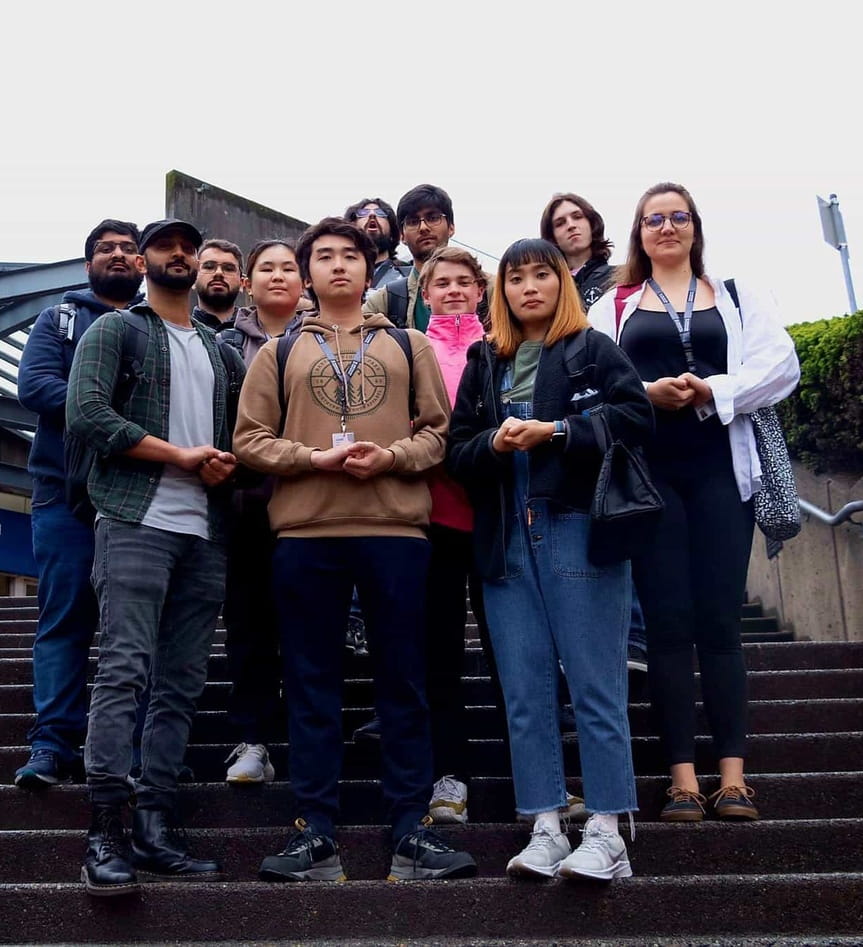
Compared to the smaller Foundations intake, the Film Production program felt much bigger, with around forty students in the class. What made the environment even more intense was the level of experience many students already had. Some classmates had previously worked in the industry, while others were already established cinematographers, producers, or creatives from different parts of the world. Being surrounded by people with that level of experience was both intimidating and inspiring at the same time.
This was the stage where filmmaking stopped feeling experimental and started feeling professional.
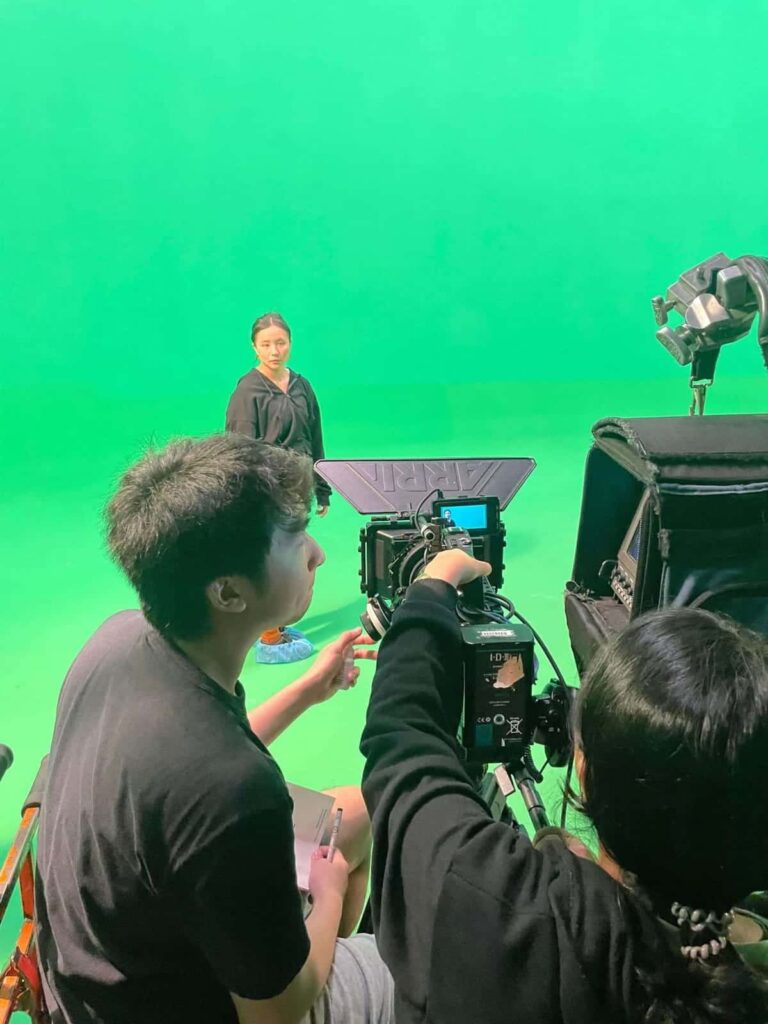
The equipment alone completely changed the atmosphere of productions. For the first time, we were working with industry-standard gear such as ARRI cameras and prime lenses. I still remember one of my instructors warning us how carefully we needed to handle the lenses because a single ARRI prime lens could cost anywhere from around $1,500 to well over $30,000 CAD depending on the lens. Suddenly, something as simple as changing a lens felt like a life or death situation.
That level of responsibility changes the way you approach filmmaking very quickly.
Everything felt more serious. There was greater attention to detail, more pressure during productions, and a much stronger expectation to stay organized and professional at all times. Even handling equipment became part of learning discipline and trust within a crew environment.
It was also my first time working inside a full green screen studio.
Vancouver Film School had a massive studio space surrounded almost entirely by green screen walls, creating a full 360-degree environment. Walking into that room for the first time genuinely felt surreal. Up until then, green screens were something I mostly associated with behind the scenes videos or large-scale productions online. Suddenly, I was standing inside one myself, learning how lighting, camera placement, and visual effects all worked together to create entirely different worlds on screen.
Experiences like that constantly reminded me how much larger filmmaking really was beyond what audiences normally see.
Before entering film school, I always thought I had my future figured out. I believed I wanted to become a film director, mainly because I was drawn toward the visual storytelling, performances, and the creative vision behind films.
But once I entered the Film Production program, my perspective on filmmaking started to shift.
For the first time, I was exposed to the realities of how productions are actually built from the ground up. Filmmaking was not only about directing what appeared on screen, but also about managing people, solving problems, organizing logistics, adapting under pressure, and making sure an entire production could realistically function from beginning to end.
That was when producing started to stand out to me in a completely different way.
The more productions I worked on, the more I realized I naturally enjoyed coordinating teams, planning schedules, securing locations, communicating between departments, and finding solutions when things went wrong. I enjoyed the challenge of balancing creative ambition with practical limitations while helping turn an idea into something tangible.
It made me realize that a producer is not simply someone working behind the scenes, but someone responsible for keeping a production moving forward and helping transform an idea into reality.
One of my first major experiences producing was for a medium budget short film titled Be The Bee You Want To Be.
The film was a comedy tragedy about an aspiring actor who finally escapes his soul crushing job as a bee mascot after landing what he believes is the role of a lifetime, only to realize that leaving the past behind is not as easy as he imagined.
Producing that project gave me a completely different understanding of filmmaking.
I began to realize that a producer is essentially the CEO and project manager of a film. Beyond the creative side, producing involved managing logistics, solving problems, coordinating people, negotiating locations, handling schedules, and making sure the project could realistically come together within its limitations.
One moment from that production still stands out to me today.
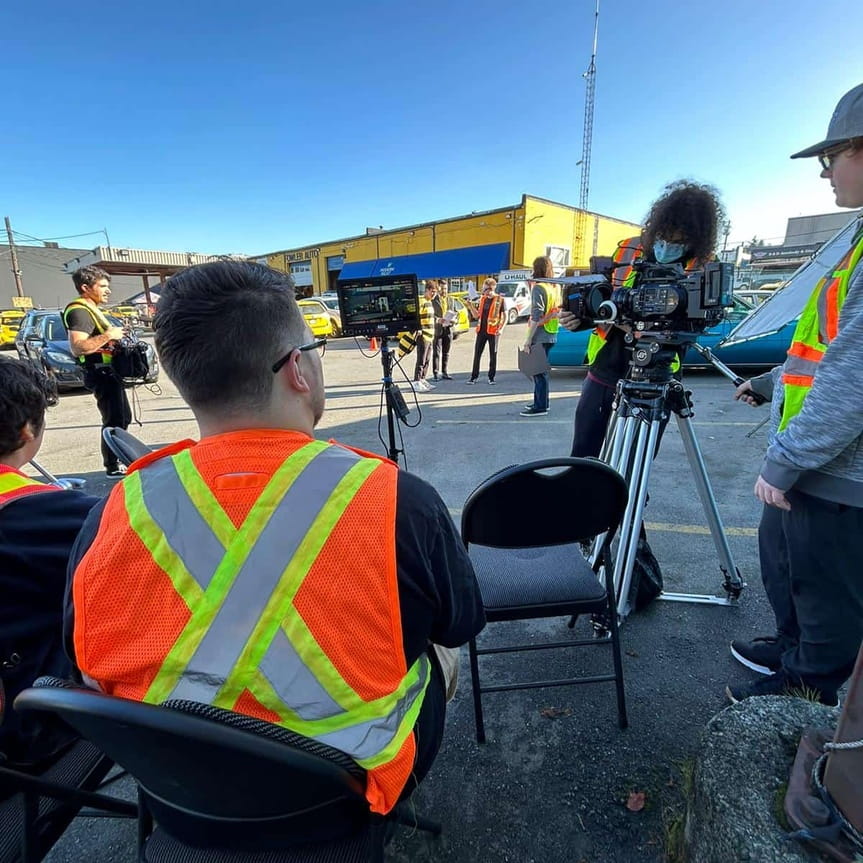
The director wanted the film to maintain a very specific yellow color palette throughout the project. While designing yellow interiors was manageable, finding a naturally yellow exterior location without needing major modifications felt nearly impossible. Funny enough, after searching for yellow buildings online, I came across an auto shop that happened to have an entirely yellow exterior.
What surprised me most was not just finding the location, but successfully negotiating permission for us to film there.
The auto shop exclusively serviced Yellow Cab vehicles, meaning the parking lot was filled with recognizable Yellow Cab logos and branding. Shooting there without permission could have created major legal issues and potentially prevented the film from being used publicly or submitted to festivals. Somehow, I managed to negotiate permission not only from the auto shop itself, but also from Yellow Cab directly.
Looking back, that experience made me realize how much producing had strengthened my communication and negotiation skills.
It was one of the first times I truly understood that filmmaking is not only about creativity behind the camera, but also about leadership, problem-solving, and the ability to make things happen under pressure.
Film Production also pushed me to my physical and mental limits in ways I never expected.
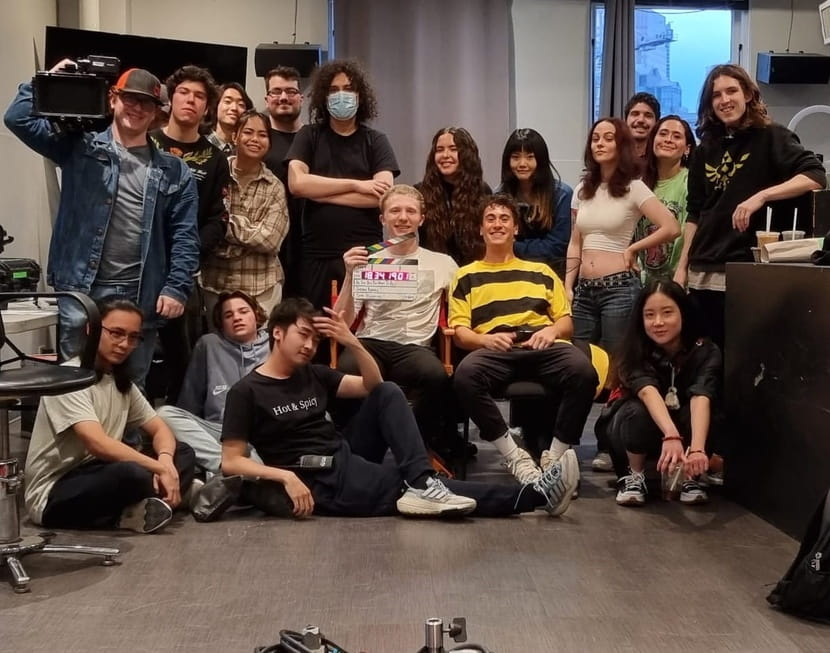
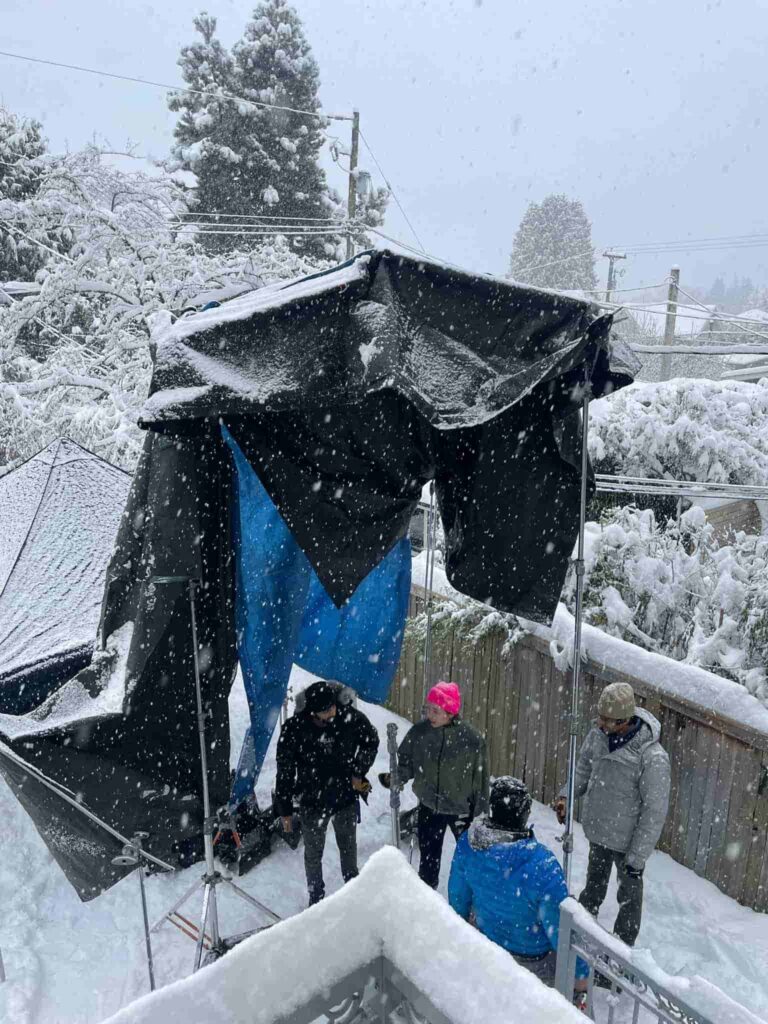
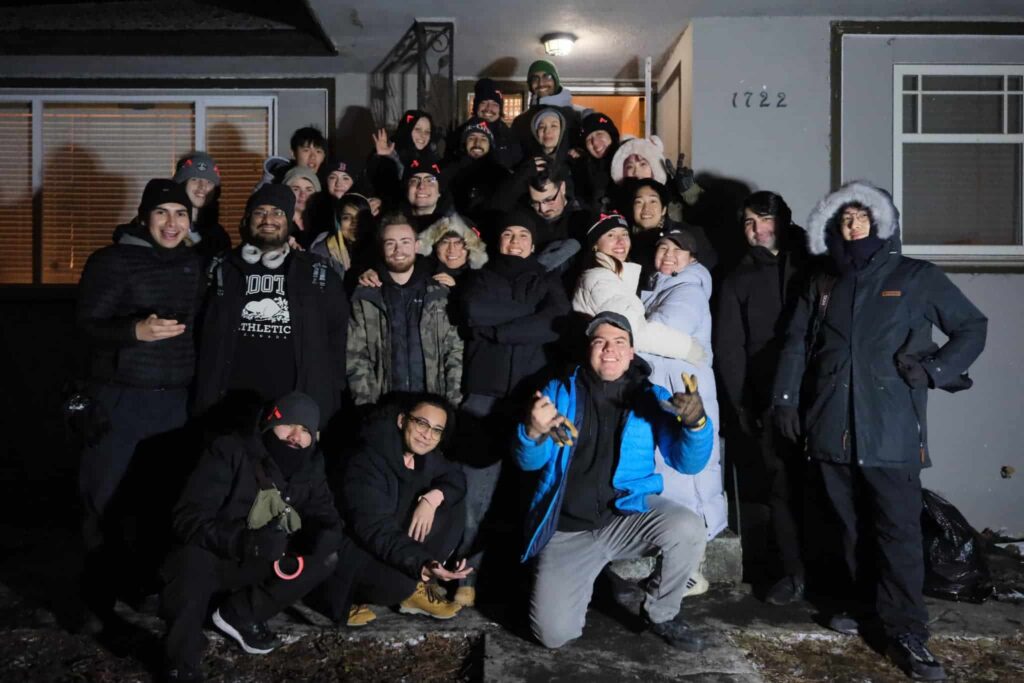
Crew Members, Ketchup, 2023 (Photo by Ken Martinez)
Toward the end of the program, we were working on our final short films and shooting out of a small house near Kitsilano that belonged to one of our crew members. The house itself was far from ideal and was actually scheduled for demolition the following week, but at that point we were willing to work with whatever we had available to finish the production.
During one of those overnight shoots in January 2024, Vancouver was hit by an arctic chill.
None of us were truly prepared for how cold it became. Temperatures dropped to around negative fifteen degrees Celsius while we were filming through the night. There were around thirty two crew members and seven actors working inside and outside the house, but the space was far too small to comfortably hold everyone at once.
We only had two heaters available. One was reserved for the actors’ station while the other was shared among the crew. People constantly rotated between staying inside briefly, working outside in the freezing cold, and trying to warm up whenever possible. Everyone was exhausted, freezing, and running on very little sleep.
Honestly, it was miserable.
But looking back, moments like that showed me the level of dedication filmmaking demands from the people involved. Despite the conditions, everyone continued pushing forward because we all believed in finishing the project together. It reminded me that filmmaking is built on the commitment of the people willing to sacrifice comfort, time, and energy to bring a story to life.
The long production days, constant planning, creative pressure, and fast-paced environments taught me that filmmaking is just as much about leadership and adaptability as it is about creativity. No matter how carefully something is planned, there is always a problem waiting to be solved on set. Learning how to stay calm under pressure and continue moving forward became one of the most important skills I developed during this time.
At the same time, I also began to understand myself more clearly as a filmmaker.
The Film Production program pushed me creatively, physically, and mentally in ways I never expected. There were moments where productions became overwhelming, where exhaustion took over, and where unexpected problems forced everyone to adapt quickly under pressure. But those experiences also became some of the most valuable lessons I could have asked for.
They taught me the importance of teamwork, communication, leadership, and trust within a production environment.
The program also pushed me to become more confident creatively. Instead of overthinking every decision, I slowly started trusting my instincts more, communicating ideas more clearly, and understanding how to balance creative vision with practical execution.
Looking back, this stage of my journey shaped me just as much personally as it did creatively.
It taught me how to work with different personalities, how to lead under pressure, and how to keep moving forward even when things did not go according to plan. More importantly, it reinforced why I chose this path in the first place.
As the Film Production program slowly came to an end, I found myself reflecting on how much had changed since I first walked into Vancouver Film School. What started as simple curiosity toward filmmaking had evolved into something much deeper. The long nights, difficult productions, creative challenges, and collaborations with talented people all shaped the way I viewed storytelling and the industry itself.
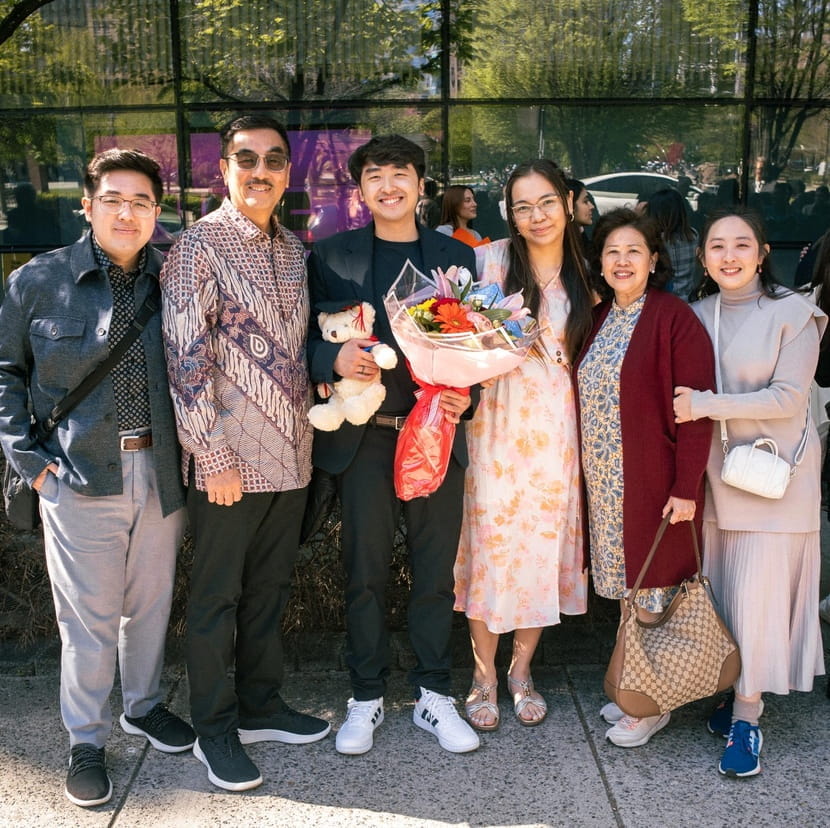
The graduation ceremony was held at the VIFF Centre, which honestly felt like a huge upgrade compared to the venue used during the Foundations program graduation. It was a surreal feeling sitting there knowing how much had happened throughout the journey leading up to that moment.
My parents had flown all the way from Indonesia to attend the ceremony, which meant a lot to me considering how uncertain everything once felt when I first told them I wanted to pursue filmmaking. Accompanying me was also my beautiful girlfriend, who had been by my side throughout my filmmaking journey and supported me through the stressful productions, long nights, and everything in between.
As exciting as graduation felt, there was also a part of me that felt emotional knowing the program was coming to an end. After spending so much time creating, struggling, learning, and growing alongside the same group of people, it was difficult to imagine everyone eventually going their separate ways.
But even after graduating, I never stopped staying in contact with many of the people I met throughout both the Foundations and Film Production programs. The friendships, collaborations, and connections built during that time became one of the most meaningful parts of the entire experience.
Graduating from the program did not feel like reaching a finish line.
If anything, it felt like stepping into the beginning of a much larger journey.
By that point, filmmaking no longer felt like something distant that I admired from afar. It had become part of who I was, both creatively and personally.
And although this chapter is called The End, in many ways, it feels more like the beginning of everything still ahead.
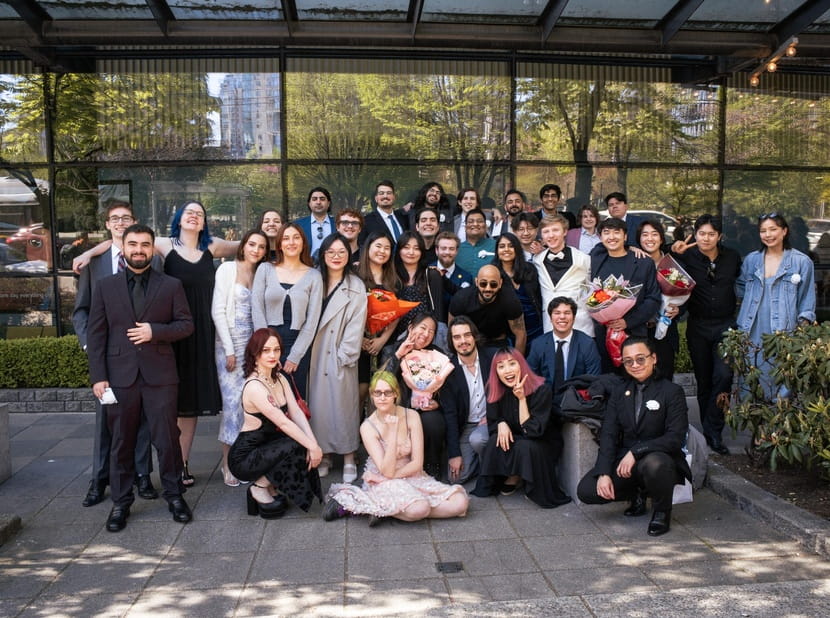
VFS Film Production Graduation 2024 (Photo by Celine Gunawan)